Buttocks Implants (Gluteal Implants)
Buttocks implant surgery is an aesthetic–reconstructive procedure aiming to correct volume deficiency and contour irregularities of the gluteal region with silicone implants. It may be considered in carefully selected patients whose expectations, general health status and tissue characteristics are suitable for implant-based augmentation.
What is a gluteal implant?
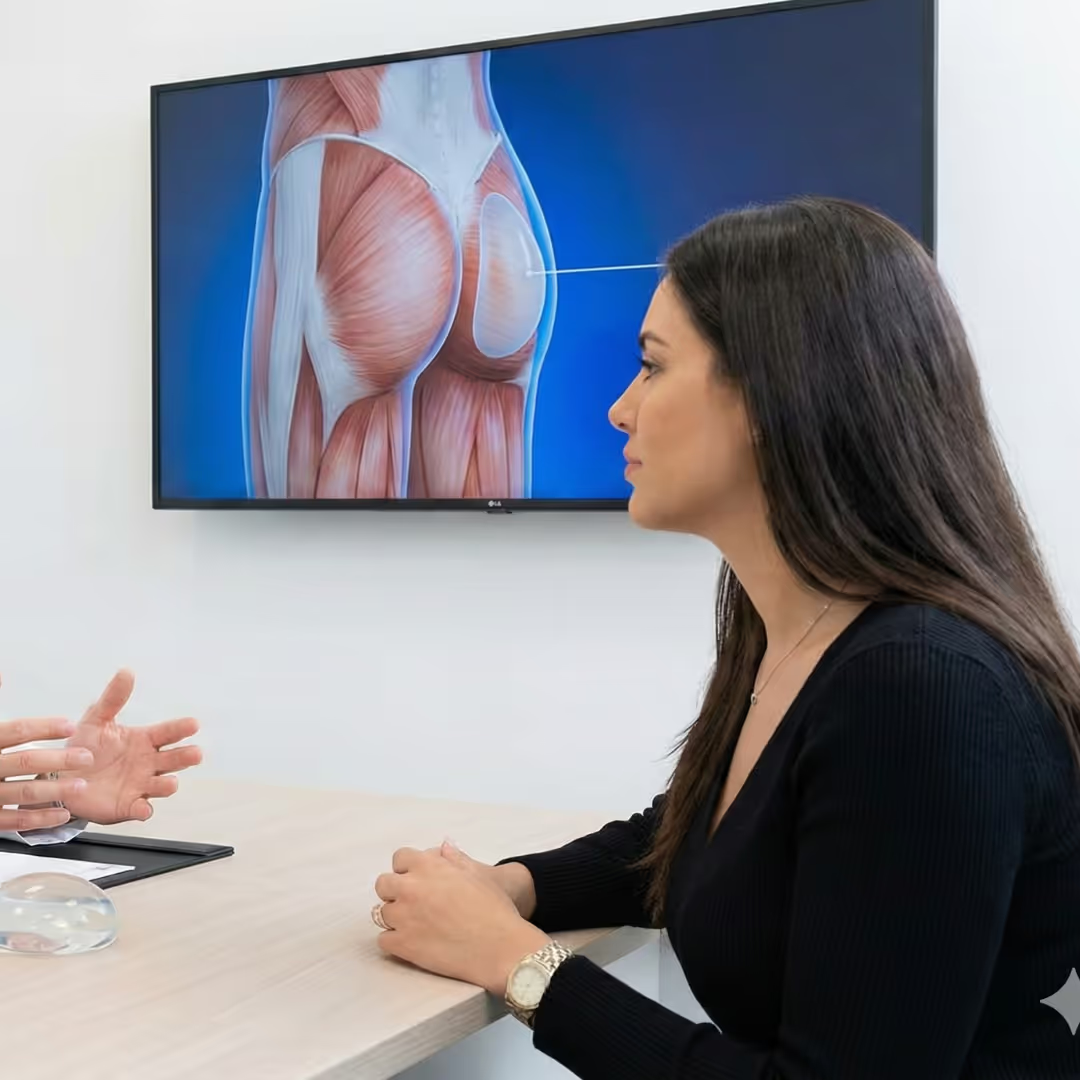
Gluteal implants are solid, cohesive silicone prostheses specifically designed for the anatomy of the buttocks. They are produced in different sizes and shapes (usually oval or anatomical) in order to adapt to the patient’s pelvic width, soft-tissue thickness and desired projection. Unlike injectable fillers, the effect of an implant is long-term as the device remains in place unless it is removed or replaced for medical reasons.
Who may be a candidate?
Candidates for buttocks implant surgery are generally adults who:
- Have flat, under-projected or asymmetric buttock contours due to constitutional structure, weight loss or ageing,
- Do not have sufficient fat deposits for fat transfer, or prefer an implant-based solution,
- Do not have an active infection, uncontrolled systemic disease or smoking-related risk that would significantly increase surgical complications,
- Have realistic expectations and understand the potential risks and limitations of the procedure.
The final decision is made after a detailed consultation and physical examination. In some cases, buttocks implants can be combined with liposuction or fat grafting to refine the waist–hip transition and overall silhouette.
Preoperative assessment
Before surgery, a standard medical evaluation is performed. The patient’s medical history, previous operations, medications and potential risk factors (such as cardiovascular disease, coagulation disorders, diabetes, smoking) are reviewed. Laboratory tests and, when necessary, additional cardiology or anaesthesiology consultations may be requested.
During the consultation, the following points are assessed:
- Quality and thickness of the soft tissue in the gluteal region,
- Pelvic structure and lumbar–hip curvature,
- Presence of skin laxity, cellulite or deep dimples,
- Symmetry between the right and left buttock.
Based on these findings, the approximate implant size and placement plane (usually intramuscular) are planned individually for each patient.
Surgical approach (general information)
Buttocks implant surgery is performed under operating-room conditions, usually with general anaesthesia. The most commonly preferred technique is intramuscular placement, where the implant is positioned within the gluteus maximus muscle. This approach aims to provide more soft-tissue coverage over the implant and may reduce palpability and certain complication risks compared with more superficial planes.
The incision is typically placed in the midline between the buttocks or within the gluteal crease to keep the scar relatively concealed. After creating the appropriate pocket, the implants are placed symmetrically, and haemostasis is carefully checked. Drains may be used depending on the clinical judgement of the surgeon. At the end of the procedure, the incision is closed in layers and a compression garment is applied.
Technical details of the operation (implant pocket design, suture technique, antibiotic protocol, use of drains and postoperative positioning) are determined according to the surgeon’s experience and current safety recommendations.
Hospital stay and early postoperative period
Most patients stay in hospital for the first night to allow pain control, early mobilisation under supervision and monitoring for potential early complications. Sitting directly on the implants is generally limited for a certain period, and patients are instructed to rest more in a prone or lateral position, especially in the early postoperative days.
It is normal to experience swelling, tightness and some degree of discomfort in the gluteal region after surgery. Appropriate pain management, antibiotics (when indicated), thrombosis prophylaxis for high-risk patients and wound-care instructions are provided according to individual needs.
Return to daily life and physical activity
Recovery time may vary depending on the patient’s occupation, pain threshold and additional procedures performed. Many patients are able to return to desk-based work within approximately 2–3 weeks, provided that the postoperative instructions are carefully followed. More intensive physical activities, sports and exercise that increase pressure on the gluteal area are usually postponed for several weeks. The final decision is made according to the surgeon’s assessment at follow-up visits.
Bruising and oedema gradually decrease over the first weeks. The implants settle into their final position over time, and the definitive contour becomes more evident within a few months.
Possible risks and complications
As with all surgical procedures, buttocks implant surgery carries certain risks. These may include:
- Bleeding, haematoma or seroma formation,
- Infection or wound-healing problems,
- Implant malposition, rotation or asymmetry,
- Capsular contracture or implant palpability,
- Changes in skin sensation in the operated area,
- Unfavourable scarring,
- Complications related to anaesthesia or general health status.
Rare but serious complications have been described in the literature. For this reason, it is essential that the procedure is performed in an appropriately equipped hospital by a plastic surgeon experienced in gluteal surgery, and that patients are fully informed about potential risks and alternative treatment options.
Longevity of results and need for revision
Gluteal implants are designed as long-term devices; however, they are not considered “lifetime” prostheses. Over the years, changes in body weight, ageing of the surrounding tissues, lifestyle factors or implant-related issues may make revision surgery necessary. Regular follow-up examinations allow early detection of potential problems and timely planning of corrective procedures when required.
Alternative or complementary procedures
In suitable candidates, fat transfer to the buttocks (Brazilian Butt Lift) may be an alternative or complementary technique. In some patients, combining a moderate-volume implant with selective liposuction and fat grafting can provide a more balanced and natural transition between the waist, hips and thighs. The choice of technique is made after evaluating the patient’s anatomy, medical profile and expectations in detail.
Summary
Buttocks implant surgery is a procedure that aims to restore or enhance gluteal volume and contour in a controlled and predictable manner. Correct indication, meticulous surgical planning and close postoperative follow-up are key elements for optimising both safety and aesthetic outcome. The information presented on this page is of a general nature and does not replace an individual medical consultation. Each patient should be evaluated personally by a qualified plastic surgeon before any decision is made.
.svg)
.svg)


.svg)


.avif)
.avif)


.avif)

.svg)



.png)

.avif)